
In the ongoing war between Russia and Ukraine, one issue has become impossible to ignore: political agendas, and both global and domestic politics consistently overshadowing the devastating human cost of the conflict. Politicians debate strategy, alliances, trade routes, and blame with intensity, but that noise drowns out the reality that millions of people are being harmed every day. The issue is not only the war itself, but the way political obsession blinds everyday people to the suffering of war.
This matters because the moment we stop seeing the people in a war, we lose the ability to understand the true cost of conflict. Instead of confronting tragedy, we consume narratives. Instead of remembering the human beings caught in mass destruction, we interpret events through whatever political lens confirms our beliefs.
To understand the scale of this problem, we need background on how the war began. Vladimir Putin launched the full-scale invasion of Ukraine on February 24, 2022, calling it a mission to “demilitarize and denazify” (Putin) the country, a claim widely rejected as a manipulation of history. The invasion followed years of escalating tension: Russia had already seized Crimea in 2014 and backed rebel states in eastern Ukraine. Putin questioned Ukraine’s right to exist, calling it an “artificial state,” (Putin) portraying its government as illegitimate. These narratives were not just political statements; they became the justification for one of the largest invasions in modern European history.
As the war intensified, so did misinformation and political framing around it. Putin accused Ukraine of genocide, despite no international body finding evidence for that claim. He condemned President Zelensky as a “Nazi,” despite Zelensky being Jewish and democratically elected. Meanwhile, debates in the West have often centered on NATO, elections, or which political party “benefits” from supporting Ukraine. This Resulted in lot of strategic arguments that leave little room for the experiences of ordinary people who are living through the war.
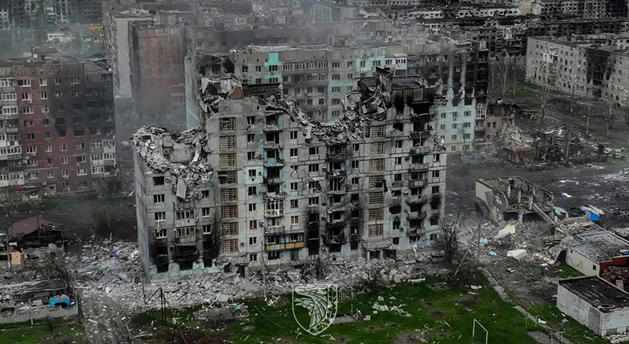
Those human realities are bleak. Tens of thousands of Ukrainian soldiers have died; thousands of civilians have been killed in strikes on neighborhoods, schools, and apartment blocks. Millions have been displaced. Russian families have also suffered under conscription, economic hardship, and censorship. Yet these stories rarely stay in the spotlight for long.
So, what should we do? First, we must demand journalism, and further public conversation that prioritizes human stories over political spectacle. Citizens should be skeptical of news narratives that reduce suffering to talking points. Instead of focusing only on geopolitics or partisan arguments, news coverage must consistently highlight the lived reality of the people trapped in this conflict. Second, we should support efforts, whether humanitarian aid organizations, refugee relief groups, or credible reporting. In doing this we can keep civilians at the center of our understanding. Finally, we must hold leaders accountable when they use war as a tool for political gain rather than a crisis demanding empathy, clarity, and responsibility.
Wars are fought by governments, but they are survived, or not, by ordinary people. If our attention stays locked on political rivalry and commentary instead of human consequence, then we fail the very people whose suffering should matter most. The Russia–Ukraine war is not just a geopolitical struggle; it is a human tragedy and unless we choose to see it clearly, the people living through it will remain unheard.